Big Foot’s camp three weeks after Wounded Knee Massacre; with bodies of four Lakota Sioux wrapped in blankets in the foreground; U.S. soldiers amid scattered debris of camp
Join us as we continue discussing the American West!
Here are some of the books we’ve mentioned in the two-part overview:
Patricia Limerick – Legacy of Conquest Richard White – The Middle Ground William Cronon – Changes in the Land Anne Hyde – Empires, Nations, and Families Pekka Hämäläinen – Comanche Empire and Lakota America
This week we continue our survey of American History by discussing the period often referred to as Jim Crow America. We cover how to periodize the era of “separate but equal,” and we discuss when introducing the harsh reality of Jim Crow, including lynching, should be introduced to younger students of history.
We’re back! This week we return and we’re trying something a bit different. We are aiming at broader topics. Our goal is to make the podcast useful for parents who now find themselves in charge of their children’s education at home. Don’t get us wrong, we’ll continue to have the same level of historical discussion and debate you’ve grown used to, but we’ll wrap it all in larger chronological chunks.
This episode cover Reconstruction, the period from 1865-1877, we talk about constitutional amendments, the Freemen’s Bureau, the rise of the KKK, the introduction of Black Codes, and the labor situation in the South following the Civil War.
Illinois delegates at the Democratic National Convention of 1968, react to Senator Abraham Ribicoff’s nominating speech for George McGovern in which he criticized the tactics of the Chicago police against anti-Vietnam war protesters. August 1968. Warren K. Leffler, U.S. News & World Report Magazine.
This week on An Incomplete History, we discuss the development of the primary system in the United States. When and how did the two major political parties decide to hold primaries before their conventions and the subsequent presidential elections? What’s the difference between a primary and a caucus? Why do Iowa and New Hampshire go first? Is the primary system constitutionally mandated? Hilary and Geoff discuss all those things and more this week.
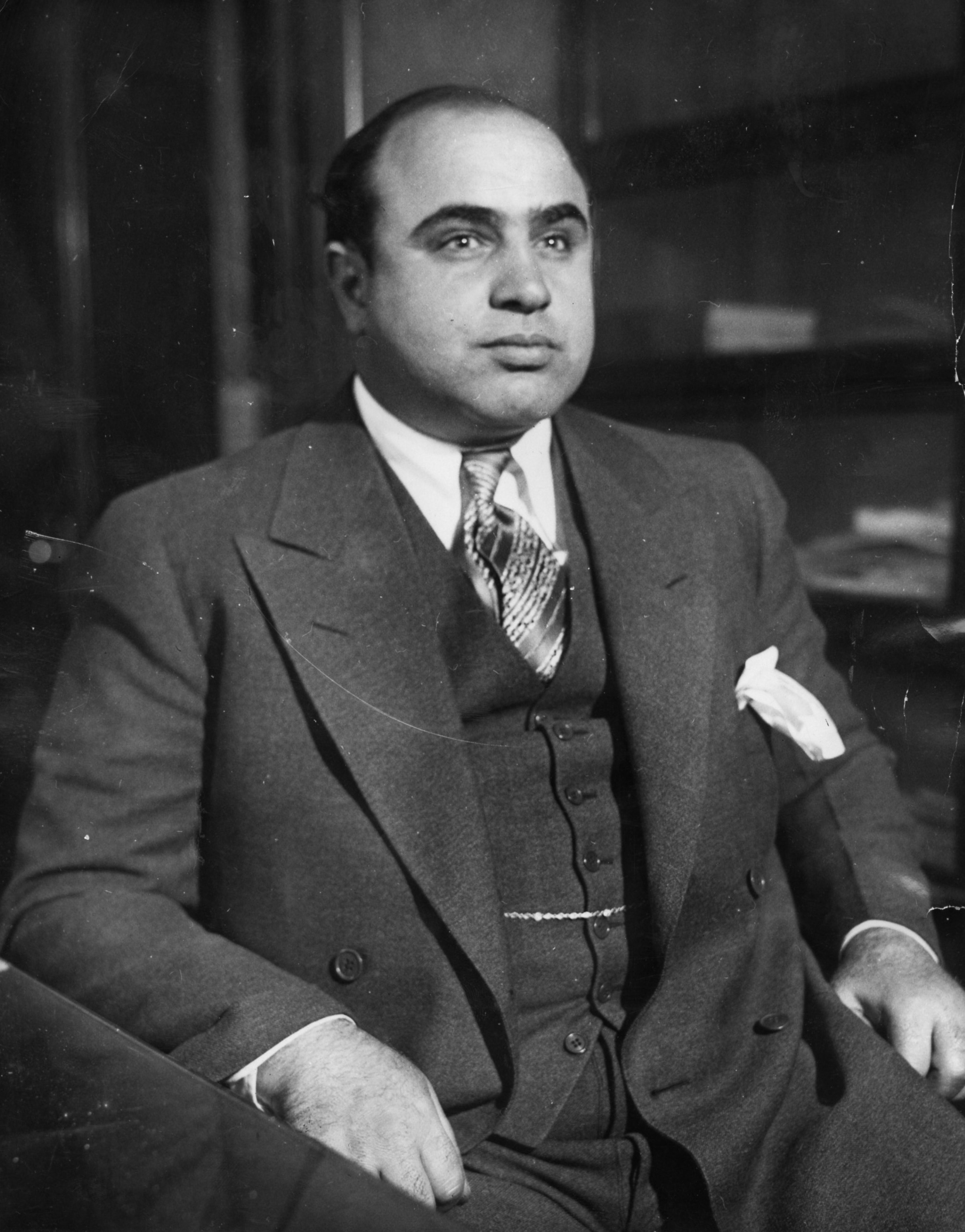
“Scarface” Al Capone is shown here at the Chicago Detective bureau following his arrest on a vagrancy charge as Public Enemy No. 1 in this 8 x 10 black & white original wire photograph that has attached the original news bureau caption on verso, dated “2-26-31.”
February 14th isn’t just about flowers, candy, and dinner with your sweetheart. It is also the anniversary of one of the bloodiest gangland confrontations in US history. On February 14, 1929 seven men were shot in a north Chicago garage. This wasn’t just the ratcheting up of Prohibition-era violence in Chicago, a city seemingly out-of-control. It was also a key moment in the expansion of the Federal Government’s powers to override local control.
In our discussion of the massacre we also cover the valorization of crime, issues surrounding the racialization of criminals, and the legacy of gangs and men like Al Capone on US pop culture.
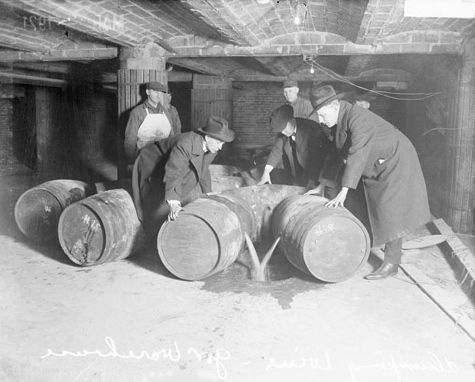
Prohibition agents destroying barrels of alcohol DN-0072930, Chicago Daily News negatives collection, Chicago Historical Society. 1921.
This week on An Incomplete History Hilary and Geoff discuss the implementation and long-term effects of the 18th Amendment, that’s prohibition, on the United States. Where did the idea for a nation-wide ban on alcohol come from? What did advocates hope to accomplish? Can we really blame prohibition for a rise in organized crime? And how does the 18th Amendment, nullified decades ago, still affect your life today? Join us this week to find out.
Iran Hostage Crisis student demonstration, (1979) Washington, D.C. U.S. News & World Report Magazine Photograph Collection.
This week Hilary and Geoff provide a little context for the often-torturous relationship between the United States and Iran. Join us as we discuss the beginnings of diplomatic contact between the countries in the nineteenth century, the rise of US involvement in the post-World War 2 Middle East, the first peace-time coup engineered by US intelligence, the Hostage Crisis, and more.
The Dinkum Boy calendar was sent to the Patent Copyright office. The calendar even though produced in 1919 still shows patriotic fervor. Archives New Zealand Reference: PC4 1015/1919
An Incomplete History returns from winter break with a special episode. We discuss the biggest events of 2019 and put them into broader historical contexts. Join Hilary and Geoff as they try to predict what historians will consider important about the last year. What will historians ten, fifty, and a hundred years from now say about 2019? Join us for our take.
The USS Arizona (BB-39) burning after the Japanese attack on Pearl Harbor, 7 December 1941. The ship is resting level on the bottom. The supporting structure for the gun director tripod mast has collapsed and so the mast has tilted. Wikimedia Commons
Join Hilary and Geoff as they discuss the legacy of Pearl Harbor. Elements of the Japanese Navy attacked the naval base at Pearl Harbor on December 7, 1941 and FDR delivered one of the most famous speeches in presidential history on the 8th. How should we remember Pearl Harbor? Was is really a surprise or had the US and Japan been involved in a simmering conflict for some time? To learn more join us for this special episode of An Incomplete History.
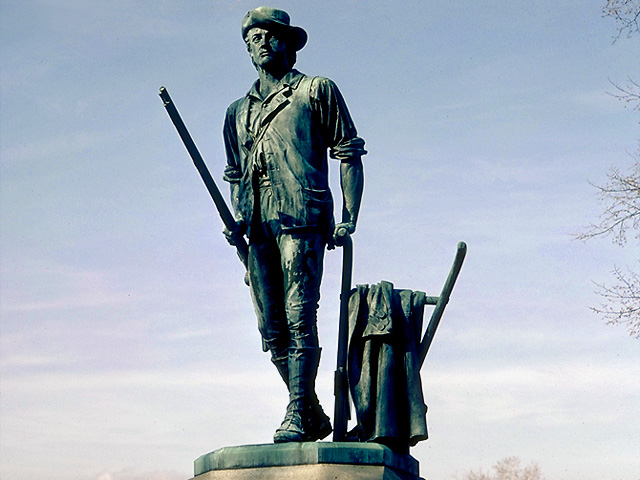
Hilary and Geoff are back to discuss the Second Amendment (that’s the one about guns). Join us as we trace the antecedents to the Second Amendment. How did English common law and the 1689 Bill of Rights influence its conceptualization? How formative were the state constitutions of 1776/77? How have major Supreme Court decisions influenced out own views? We even discuss a major historical work first celebrated then vilified for its take on America’s gun culture.